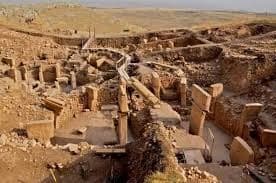
Recent scientific research suggests that parts of the ancient settlement at Keezhadi in Tamil Nadu may have been buried by a powerful flood more than a thousand years ago. According to the study, urban-style brick structures at the site were covered by layers of sand, silt, and clay deposited during a high-energy flooding event around 1,155 years ago.
Archaeologists have been excavating Keezhadi, located along the Vaigai River, for several years. The site has revealed well-planned brick buildings, drainage channels, floors made of fine clay, and large quantities of pottery. These findings indicate an organised urban settlement, possibly dating back to the Sangam period.
To understand when and how these structures were buried, researchers from the Physical Research Laboratory, Ahmedabad, and the Tamil Nadu Department of Archaeology studied the sediment layers covering the remains. They focused on the fact that the buildings were not exposed at the surface, but lay beneath thick deposits of river-borne material.
The team used Optically Stimulated Luminescence (OSL) dating, a technique that determines when sediment grains were last exposed to sunlight. By analysing quartz samples collected from different depths, the scientists estimated the time period when flood sediments were deposited over the settlement.
The results showed that multiple layers of sand and finer sediments were laid down over several centuries, with a major flood event occurring roughly a millennium ago. This flood appears to have brought large volumes of material from the Vaigai River, burying parts of the settlement and possibly forcing residents to relocate.
The study also places this event within a broader climatic context. During the late Holocene period, climate conditions in the Indian subcontinent were highly variable, with alternating wet and dry phases. Such fluctuations likely caused rivers to change course and experience intense flooding, affecting settlements that depended on river systems.
Researchers note that while the study does not directly prove climate change caused Keezhadi’s abandonment, it highlights how large floods can reshape landscapes and disrupt human habitation. The findings offer important insights into how ancient communities interacted with changing environments and how natural events may have influenced the rise and decline of early urban centres.


