Guru Gobind Singh Ji
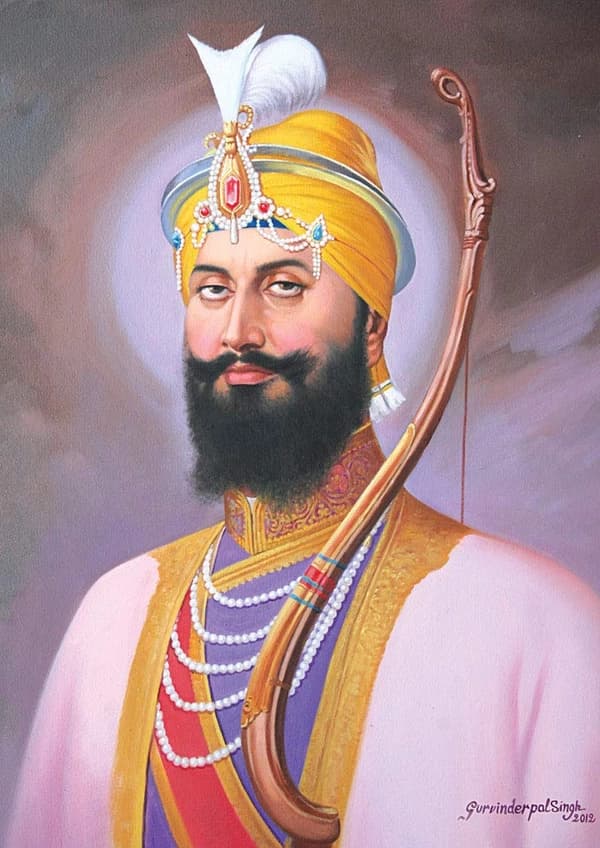
Guru Gobind Singh Ji (1666-1708) was the tenth and last Sikh Guru, a towering figure in Indian history known for his spiritual leadership, courage, and commitment to justice. Born at Patna Sahib, he became Guru at the age of nine after the martyrdom of his father, Guru Tegh Bahadur, who laid down his life to defend religious freedom. This early experience shaped Guru Gobind Singh Ji’s resolve to stand firmly against oppression and injustice.
His most transformative contribution came in 1699 at Anandpur Sahib, when he founded the Khalsa Panth on the occasion of Vaisakhi. Through the Khalsa, Guru Gobind Singh Ji gave Sikhs a distinct identity rooted in equality, discipline, and fearlessness. He introduced the Five Ks, which became visible symbols of faith and moral responsibility. The Khalsa ideal emphasized the unity of spiritual devotion and righteous action, encouraging Sikhs to protect truth and uphold human dignity.
Guru Gobind Singh Ji was not only a warrior but also a profound scholar and poet. He composed works in Punjabi, Braj, and Persian, blending spiritual wisdom with a call for ethical courage. His famous Zafarnama, written to the Mughal emperor Aurangzeb, condemned betrayal and tyranny while affirming moral victory over injustice.
Throughout his life, Guru Gobind Singh Ji rejected caste discrimination and promoted equality among all people, regardless of birth or belief. He believed that devotion to God must be expressed through service, integrity, and resistance to wrongdoing.
Before his passing in 1708 at Nanded, Guru Gobind Singh Ji declared the Guru Granth Sahib as the eternal Guru of the Sikhs, ending the line of human Gurus. This decision ensured unity and continuity of Sikh teachings. His life and legacy continue to inspire millions with ideals of bravery, sacrifice, equality, and unwavering faith.


