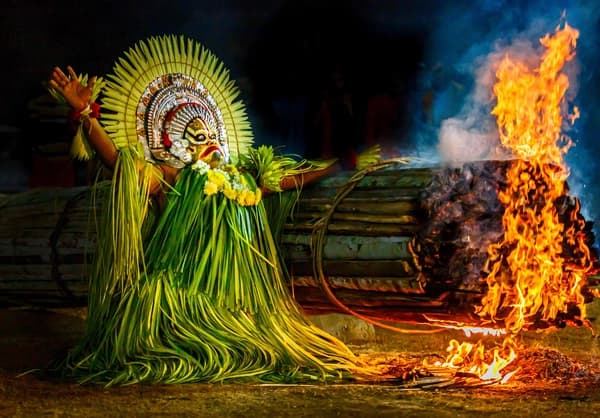
Daiva Kola (also known as Bhuta Kola) is a traditional ritualistic folk performance of Tulu Nadu—the coastal region of Karnataka and northern Kerala—in which performers are believed to become possessed by local guardian spirits (Daivas or Bhutas). Through trance, music, dance, and elaborate costumes, the performer acts as a living medium between the divine and the community.
Key features of Daiva Kola
Meaning: Kola means play or performance; Daiva/Bhuta refers to divine or ancestral spirits.
Spirits worshipped: Local guardian deities such as Panjurli (boar spirit), Guliga (associated with Shiva), Kalkuda, Kallurti, and others.
Ritual process: The performer enters a trance, wears striking headgear and body paint, and is believed to speak and act on behalf of the spirit.
Purpose: To bless devotees, protect villages, resolve disputes, and restore social and cosmic balance.
Cultural roots: Deeply embedded in Tulu society, passed down through oral traditions (paddanas) and family lineages.
In essence, Daiva Kola is not just a performance but a sacred ritual, where the Tulu community directly engages with its ancestral protectors and local deities.


