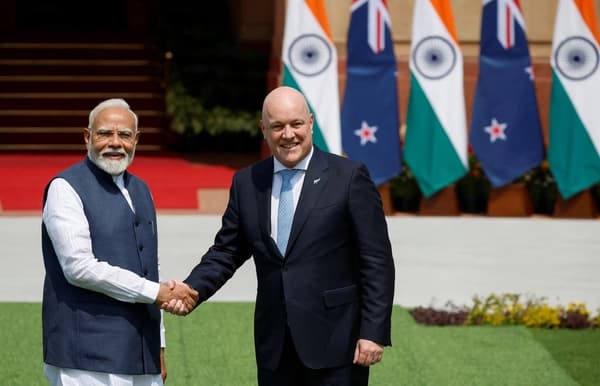
India and New Zealand on Monday concluded negotiations on a free trade agreement (FTA) that will grant India tariff-free access to New Zealand’s markets, attract investments worth $20 billion over the next 15 years, and help double bilateral trade to $5 billion within five years.
Under the agreement, tariffs on about 95% of New Zealand’s exports to India—ranging from timber to fruits—will be eliminated or reduced. At the same time, India has protected politically sensitive sectors by excluding key agricultural and dairy products from concessions. Imports of dairy products, onions, sugar, spices, edible oils and rubber have been kept outside the scope of the pact.
As part of the agreement, New Zealand will offer temporary employment visas to Indian professionals in skilled occupations. The arrangement allows for 5,000 visas annually, with a maximum stay of up to three years.
Union Commerce Minister Piyush Goyal said the government had been careful to safeguard farmers’ interests. “Rice, wheat, dairy, soya and several other agricultural products have not been opened up for access,” he said.
Welcoming the agreement, which is expected to be formally signed in the first half of 2026, Prime Minister Narendra Modi described it as a historic achievement. “Concluded in just nine months, this milestone reflects strong political will and a shared ambition to deepen economic ties between our two countries,” he said.
The Prime Minister held a telephonic conversation with his New Zealand counterpart, Christopher Luxon, before jointly announcing the conclusion of the FTA, according to an official statement.
The External Affairs Ministry said the agreement would significantly deepen economic engagement, improve market access, boost investment flows and strengthen strategic cooperation. It would also create new opportunities for innovators, entrepreneurs, farmers, MSMEs, students and youth in both countries across multiple sectors.
The pact is expected to help Indian exporters diversify markets, particularly in the Oceania region, at a time when exports have been affected by steep tariffs imposed by the U.S. India already has a trade agreement in place with Australia.
Mr. Goyal said the deal would open opportunities for exporters across sectors and help diversify India’s export basket, while ensuring that MSMEs, start-ups and innovators benefit from greater access to New Zealand’s market. He added that labour-intensive industries such as apparel, leather, textiles, rubber, footwear and home décor would gain, along with exports of automobiles, auto components, machinery, electronics, electrical goods and pharmaceuticals.
The temporary visa scheme will cover AYUSH practitioners, yoga instructors, Indian chefs and music teachers, as well as professionals in high-demand sectors such as IT, engineering, healthcare, education and construction, thereby strengthening services trade and workforce mobility.
For New Zealand, Mr. Luxon said the agreement would deliver substantial benefits. Highlighting India’s economic scale and growth, he said the pact would create new opportunities for jobs, exports and economic expansion.
Under the FTA, New Zealand will receive duty-free access for products such as sheep meat, wool, coal and over 95% of forestry and wood products. Duty concessions will apply to items including kiwifruit, wine, select seafood, cherries, avocados, persimmons, bulk infant formula, Manuka honey and milk albumins.
However, the agreement excludes several product categories, including vegetable products such as onions, pulses and corn; sugar; artificial honey; animal, vegetable and microbial fats and oils; arms and ammunition; gems and jewellery; copper and aluminium and their products.


